
Alaska Emotional Support Animal Laws
Get Your Documents
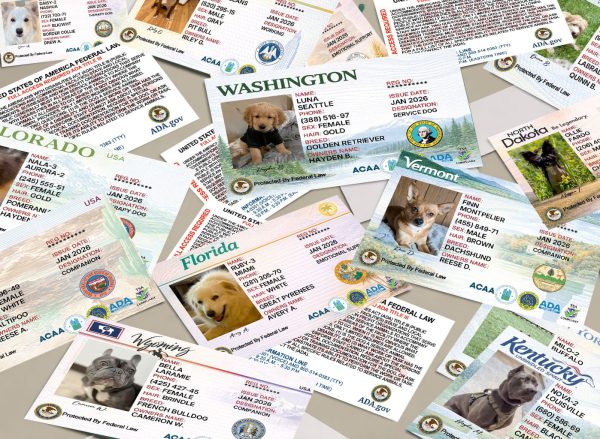
Example State Cards
Overview of ESA and Legal Definitions in Alaska
What is an Emotional Support Animal?
An Emotional Support Animal (ESA) is a companion animal that provides therapeutic benefit to individuals with a mental or emotional disability. Unlike service animals, which are trained to perform specific tasks for people with disabilities, ESA do not require specialized training. The primary role of an ESA is to offer emotional comfort and companionship, which can alleviate symptoms of conditions like depression, anxiety, or PTSD. In Alaska, as elsewhere in the United States, Alaska Emotional Support Animal Laws state that an ESA is not restricted by species but is commonly a dog or cat. The designation of an ESA is contingent on the individual’s confirmed psychological need for the animal, as determined by a licensed mental health professional.
How ESA Differ from Service Animals
The distinction between ESA and service animals is critical in understanding the legal landscape. Service animals, defined under the Americans with Disabilities Act (ADA), are specifically trained to perform tasks related to a person’s disability, such as guiding a blind individual or alerting someone with epilepsy about an impending seizure. In contrast, ESA do not have any trained special abilities. Their purpose is solely to provide emotional support through companionship. Consequently, ESA do not have the same access rights as service animals in public spaces, a distinction that holds true in Alaska as well as nationwide.
Key Federal Laws Affecting ESA (e.g., FHA, ACAA)
Federal laws such as the Fair Housing Act (FHA) and the Air Carrier Access Act (ACAA) significantly influence ESA privileges. The FHA ensures ESA are considered reasonable accommodations within housing facilities, meaning landlords must provide reasonable accommodations for ESA owners despite pet restrictions. The ACAA previously extended similar protections in air travel contexts, but recent regulatory changes have limited ESA access in favor of trained service animals. Still, under the FHA, Alaska residents with ESA retain housing rights to live with their support animals, even in accommodations where pets are otherwise banned.
State-Specific ESA Laws in Alaska
Housing Rights and Responsibilities
In Alaska, ESA owners are primarily governed by the stipulations of the Fair Housing Act. Under this act, individuals with ESA are entitled to fair housing, meaning they cannot be denied leasing opportunities solely based on their animal. Landlords in Alaska must provide reasonable accommodations for ESA owners, provided that valid documentation is presented. However, landlords retain the right to request proper verification of the ESA status via an ESA letter from a qualified mental health professional. Furthermore, tenants are still responsible for any damages caused by their ESA, and landlords can deny an ESA if it poses a direct threat to others or causes substantial property damage.
Public Access and Accommodation
Unlike service animals, ESA in Alaska do not have the legal right to enter public areas where animals are typically not allowed, such as restaurants, grocery stores, and public buildings. The distinction is clear under the ADA, which does not recognize ESA in the same capacity as service animals. Alaskan businesses must accommodate service animals but are not legally required to permit entry to ESA.
Transportation and Travel Rules
Regarding transportation, ESA do not enjoy the same protections as service animals under the Air Carrier Access Act following amendments effective January 2021. Currently, airlines are not obligated to permit ESA in the cabin under the same conditions previously authorized. However, some airlines may offer discretionary allowances for ESA following customer service policies. In Alaska, local transport authorities may allow ESA, but this is not a guaranteed right, and owners should always verify policies with travel providers before arranging travel.
Employment and Workplace Considerations
The inclusion of ESA in the workplace is not federally mandated under existing laws, including in Alaska. While the ADA provides for reasonable accommodations, these typically do not extend to the presence of ESA in work environments. Nonetheless, some Alaska employers may voluntarily allow ESA, particularly if they can demonstrate value in improving workers’ mental health and productivity. Employees seeking to bring ESA to work should communicate with their employers and provide necessary documentation to facilitate understanding and considerations for ESA in the workplace.
Documentation, Requirements, and Processes in Alaska
ESA Letters and Who Can Issue Them
A critical component of establishing an ESA is acquiring an ESA letter from a licensed healthcare provider. In Alaska, the ESA letter must be issued by a qualified mental health professional licensed to practice within the state. This letter must affirm that the individual has a disability and that the presence of the animal provides necessary support. Typical professionals who can issue such letters include psychologists, psychiatrists, and licensed social workers. Importantly, the letter does not require renewal unless circumstances necessitate it, but maintaining updated documentation is advisable.
Landlord, Business, and Provider Verification Rules
Landlords, business owners, and service providers within Alaska have the right to request verification of the ESA status through the review of an ESA letter. However, they cannot require detailed information about the individual’s mental health diagnosis. The ESA letter should be sufficient to confirm the legitimate need for the ESA. If there are concerns about an ESA’s behavior, landlords and business owners can evaluate whether the animal poses a reasonable threat or causes damages, holding ESA owners accountable if applicable.
Rights, Limitations, and Legal Risks
Rights ESA Owners Have in Alaska
ESA owners in Alaska have distinct rights primarily within the context of housing. Protected under the Fair Housing Act, ESA owners maintain the right to live with their support animals without facing discrimination or additional fees typically associated with pets. These protections do not apply in the same way to public spaces or travel accommodations within Alaska due to differing legal definitions and protections between ESA and service animals.
Limits on ESA Protections and Common Restrictions
The limitations on ESA protections in Alaska parallel federal guidelines. ESA are not granted access to all public spaces in the way service animals are. Restrictions apply in privately owned businesses, public accommodations, and many transport situations. ESA protections also do not extend to the workplace, though Alaskan employers may choose to offer accommodations individually. Concerns regarding noise, behavior, or safety allow landlords and businesses to impose reasonable restrictions on ESA presence.
Penalties for Fraud or Misrepresentation
Misrepresenting an ESA as a service animal in Alaska—a crime punishable under state fraud statutes—poses legal risks. Falsely claiming an animal’s status to gain access to otherwise restricted areas or benefits undermines genuine disability resources and can result in penalties such as fines. Alaskan residents are urged to maintain transparency and adhere to legal guidelines set forth for ESA to avoid legal trouble.
Practical Guidance for ESA Owners in Alaska
How to Qualify for an ESA Legitimately
Qualifying for an ESA in Alaska involves obtaining a letter from a licensed mental health provider that indicates the mental or emotional benefit derived from the animal’s companionship. Prospective ESA owners should ensure they consult legitimate practitioners and undergo appropriate evaluations to secure valid documentation. It is crucial to understand that an ESA is a therapeutic element of a comprehensive treatment plan.
How to Talk to Landlords, Airlines, and Employers
Effective communication is key in advocating for ESA rights within Alaska. For landlords, presenting a legitimate ESA letter and discussing any concerns openly can facilitate accommodations. When traveling, contact airlines in advance to understand their specific ESA policies, which airline staff may accommodate at their discretion. For employers, discussing potential ESA accommodations or seeking alternative strategies to employ emotional support is advised.
Summary of ESA Laws in Alaska
- Federal laws like the Fair Housing Act apply to ESA in Alaska, offering protections mainly in housing situations.
- ESA differ from service animals in that they do not require specific training nor possess public access rights.
- Alaska follows federal guidelines, meaning ESA do not have guaranteed access to public spaces or workplaces, unlike service animals.
- Proper ESA documentation via a licensed mental health provider is essential for legitimate ESA status.
- ESA owners must communicate transparently with landlords and travel providers and avoid fraudulent claims or certifications.
- Alaskans interested in ESA should seek proper guidance and remain aware of ongoing regulation changes impacting ESA rights and limitations.
This detailed overview aims to assist Alaskan residents in understanding the rights and responsibilities associated with having an Emotional Support Animal, ensuring compliance with legal standards and promoting positive community interactions between ESA owners and the public.
Get Your Documents
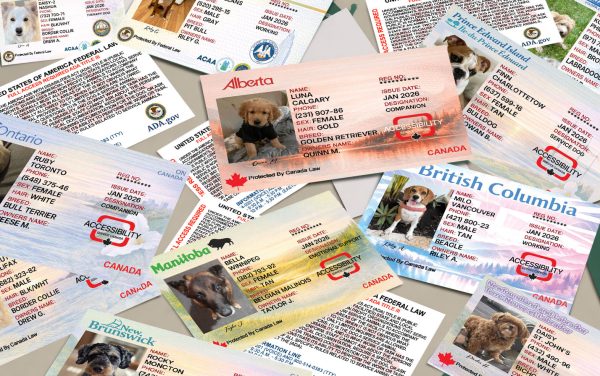
Example State Cards

Most Recent Registrations
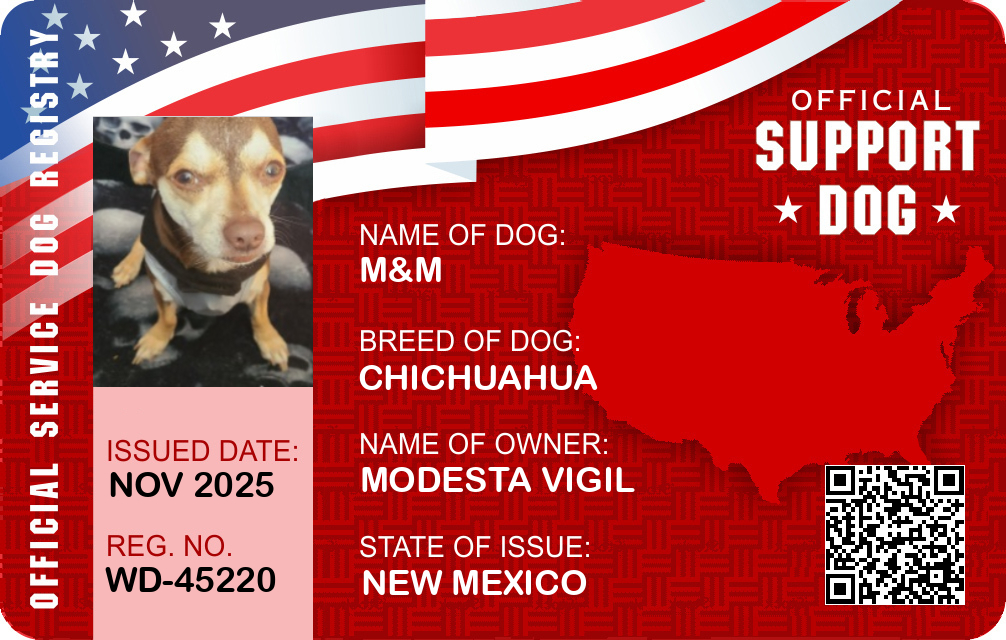
Welcome M&M from New Mexico
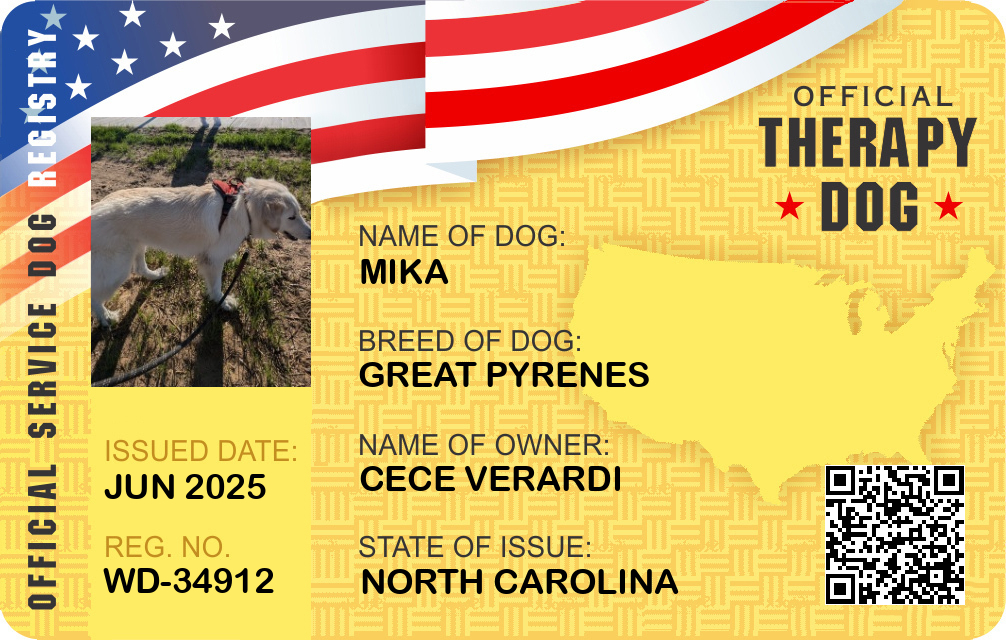
Welcome Mika from North Carolina