
California Emotional Support Animal Laws
Get Your Documents
Example State Cards


Overview of ESA and Legal Definitions in California
What is an Emotional Support Animal?
Emotional Support Animals (ESA) are companion animals that provide comfort and emotional relief to individuals with mental health or emotional disorders. They are a recognized form of therapy, but unlike service animals, they are not required to be trained to perform specific tasks related to the individual’s disability. Understanding California Emotional Support Animal Laws is important for those who wish to benefit from ESAs. ESA can be any animal species, although they are most commonly dogs or cats, and they assist individuals by mitigating symptoms of psychological conditions such as anxiety, depression, or PTSD.
How ESA Differ from Service Animals
The distinction between ESA and service animals is crucial. Service animals, as defined by the Americans with Disabilities Act (ADA), are trained to perform specific tasks that assist individuals with disabilities. In contrast, ESA do not necessitate specific training beyond basic obedience and house manners. While service dogs are given broad public access rights under the ADA, ESA do not enjoy the same legal privileges; they primarily bring benefits in areas of housing and air travel.
Key Federal Laws Affecting ESA (e.g., FHA, ACAA)
Federal laws play a significant role in determining the rights of ESA owners, particularly:
- Fair Housing Act (FHA): Under the FHA, individuals with ESA are entitled to reasonable accommodations in housing, even if a property has a “no pets” policy. Landlords are required to consider accommodations for ESA without imposing pet fees, provided the request is legitimate.
- Air Carrier Access Act (ACAA): This law used to require airlines to recognize ESA, but recent modifications mean ESA are no longer entitled to the same privileges as service animals during air travel. Airlines may treat ESA as regular pets, although some continue to accommodate them beyond typical pet restrictions, depending on their policies.
State-Specific ESA Laws in California
Housing Rights and Responsibilities
In California, the Fair Employment and Housing Act (FEHA) reinforces the federal FHA protections for individuals with ESA. Tenants can request reasonable accommodations for ESA in their housing situations. However, tenants must provide reliable documentation to substantiate their need for an ESA, and landlords can request documentation but must not ask invasive questions about the tenant’s specific condition.
Public Access and Accommodation
The presence of ESA in public spaces in California is limited compared to service animals. While ESA are not granted the same access rights under the ADA, certain locations might voluntarily allow ESA. However, businesses and other entities are not legally required to admit ESA into public spaces such as restaurants, stores, or other non-housing facilities.
Transportation and Travel Rules
California often aligns with federal guidelines regarding ESA in transportation. As noted, ESA do not automatically receive accommodations on public transportation systems unless covered by specific operator policies. Travellers should carefully verify policies on buses, trains, and airlines to ensure compliance and prevent unexpected issues.
Employment and Workplace Considerations
Employers in California are not obligated to allow ESA in the workplace. The California Department of Fair Employment and Housing ensures against discrimination, but accommodating an ESA remains at the discretion of the employer, who must balance the needs of the ESA owner with other employees’ rights and workplace safety.
Documentation, Requirements, and Processes in California
ESA Letters and Who Can Issue Them
Documentation required for ESA must typically include a letter from a licensed mental health professional that verifies the individual’s need for emotional support due to a mental health condition. The letter should be on official letterhead and include the professional’s license number and contact information. It should outline the therapeutic benefit provided by the ESA, though it need not disclose specific disability details.
Registration, Certifications, and Common Misconceptions
While many services offer ESA registrations or certifications online, California and the federal system do not recognize these as valid legal prerequisites. Such certifications are unnecessary and often misleading, focusing instead on the legitimacy of the ESA letter from a licensed professional.
Landlord, Business, and Provider Verification Rules
Landlords can request ESA documentation to verify the need for reasonable accommodation but cannot specify the contents beyond reasonable proof of need. Similarly, businesses and service providers should verify policies before deciding on ESA admittance, focusing on authentic documentation rather than informal certifications or registries.
Rights, Limitations, and Legal Risks
Rights ESA Owners Have in California
ESA owners in California are entitled to accommodations in housing to have their emotional support animals live with them. They are protected under both federal and state laws against unreasonable discrimination in housing arrangements.
Limits on ESA Protections and Common Restrictions
Unlike service animals, ESA are not granted unrestricted public access. They typically do not enjoy rights in places such as restaurants, theaters, or retail stores unless a specific business allows. Additionally, air travel companies are no longer required to accommodate ESA.
Penalties for Fraud or Misrepresentation
Misrepresenting a pet as an ESA or portraying an ESA as a service animal can result in legal penalties, including fines. California takes instances of fraudulent representation seriously to preserve the legitimacy of support animals’ rights and protections.
Practical Guidance for ESA Owners in California
How to Qualify for an ESA Legitimately
To qualify for an ESA in California, an individual must have a documented mental or emotional condition diagnosed by a licensed mental health professional. Obtaining an ESA letter from a qualified professional is crucial for demonstrating the therapeutic necessity of their ESA.
How to Talk to Landlords, Airlines, and Employers
When discussing ESA with authorities such as landlords or employers, clear communication is essential. Present the ESA letter respectfully and be prepared to discuss your ESA’s role in your health and well-being, while also respecting the limits of privacy regarding your medical condition.
Summary of ESA Laws in California
- Emotional Support Animals (ESA) provide psychological benefit, not task-specific assistance like service animals.
- Federal laws like the FHA protect ESA rights in housing, while the ACAA no longer mandates airlines accommodate ESA.
- In California, ESA have housing rights but limited public or workplace access unless specifically permitted.
- Legitimate ESA documentation should come from licensed mental health professionals; online registrations are unnecessary.
- Fraud in ESA representation is penalized; ensure compliance with proper documentation.
- ESA owners should approach landlords, airlines, and others with clear evidence of their ESA’s necessity.
- Always validate the source of any ESA-related service to avoid fraudulent activities.
This structured overview should assist California residents in understanding their rights and responsibilities concerning ESA, helping them navigate the complexities of compliance and advocacy.
Get Your Documents
Example State Cards


Most Recent Registrations
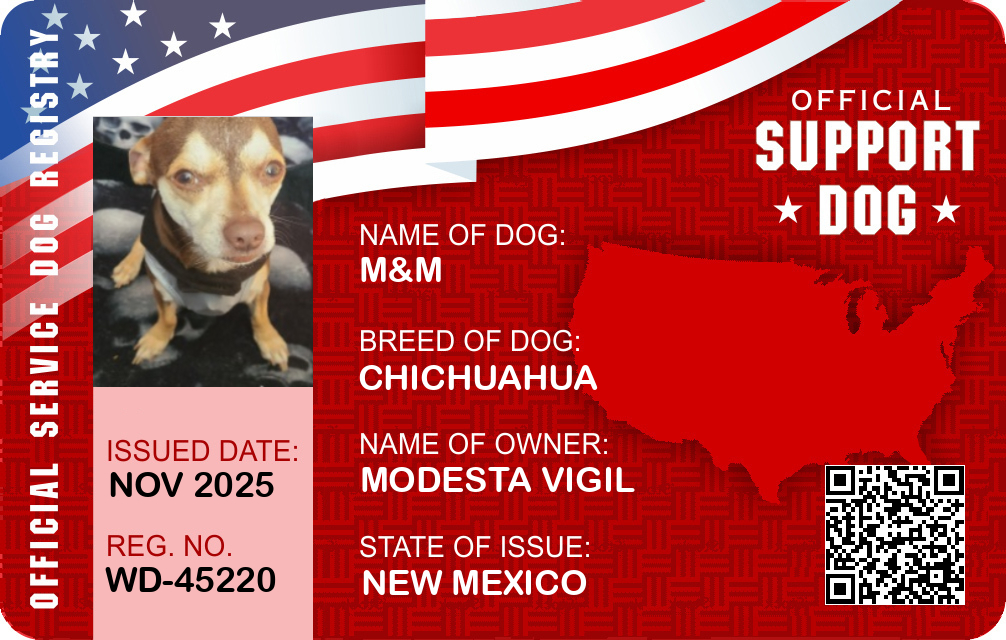
Welcome M&M from New Mexico
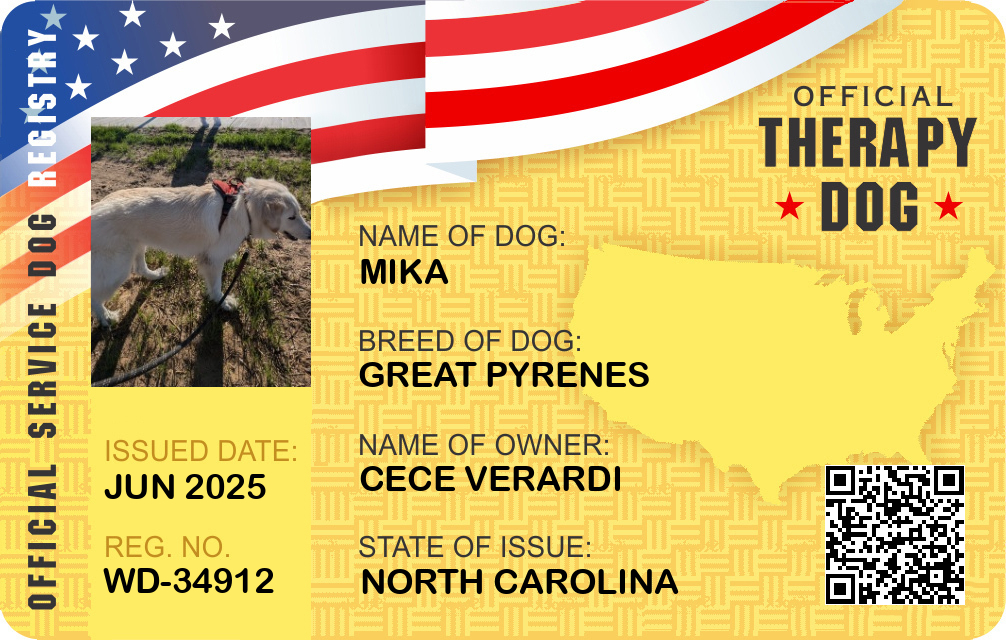
Welcome Mika from North Carolina