
New Hampshire Emotional Support Animal Laws
Get Your Documents
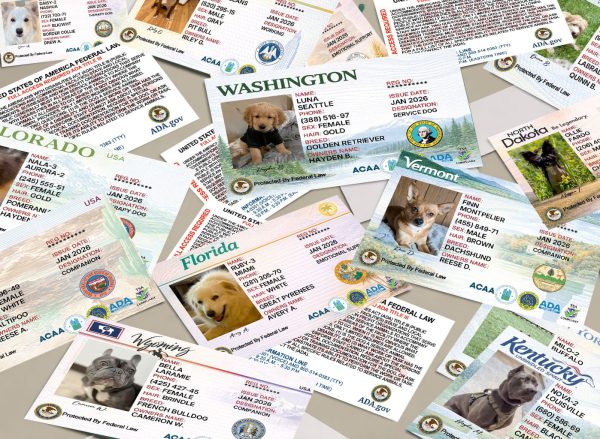
Example State Cards
Overview of ESA and Legal Definitions in New Hampshire
Emotional Support Animals (ESA) offer comfort to individuals with various mental or emotional health conditions. However, distinguishing them from service animals is crucial as their legal status and rights differ significantly. In New Hampshire, these distinctions are affected by both state-specific statutes and federal laws, which set the foundation for understanding ESA rights and responsibilities.
What is an Emotional Support Animal?
An Emotional Support Animal is primarily a pet that provides therapeutic benefit to its owner through companionship and affection. Unlike service animals, ESA are not trained to perform specific tasks to aid individuals with disabilities. Instead, they help alleviate symptoms of emotional or psychological conditions. These conditions may include anxiety, depression, post-traumatic stress disorder (PTSD), and others recognized by a licensed mental health professional.
How ESA Differ from Service Animals
Service animals are specially trained to perform tasks directly related to a person’s disability, such as guiding visually impaired individuals or alerting those who are deaf. In contrast, ESA require no such training and their primary role is to provide emotional support. This difference significantly affects their legal protections and access rights; for instance, service animals have broad access to public spaces under the Americans with Disabilities Act (ADA), whereas ESA do not.
Key Federal Laws Affecting ESA (e.g., FHA, ACAA)
Several federal laws impact ESA regulations:
- Fair Housing Act (FHA): This act requires housing providers to make reasonable accommodations for individuals with disabilities, which includes allowing ESA in housing units that have a “no pets” policy.
- Air Carrier Access Act (ACAA): Historically, this act allowed ESA on flights, but recent updates mean that airlines are no longer required to accommodate ESA as service animals.
These federal laws establish a baseline for ESA regulations, whereas local adaptations may introduce additional nuances.
State-Specific ESA Laws in New Hampshire
While New Hampshire follows federal guidelines in many respects, it also has unique regulations that govern the rights and responsibilities associated with ESA within the state. Understanding the interplay between these laws is crucial for ESA owners in New Hampshire.
Housing Rights and Responsibilities
Under the FHA, individuals with ESA are entitled to reasonable accommodations in housing across New Hampshire. This means landlords must allow ESA even if a property has a “no pets” policy. However, tenants must provide proper documentation, such as an ESA letter from a licensed mental health professional. It’s important to note:
- Landlords can request verification of the need for an ESA but cannot demand specific details about the tenant’s condition.
- Housing providers may deny ESA requests if the animal poses a direct threat or causes significant property damage.
Public Access and Accommodation
Public access laws for ESA in New Hampshire align with federal statutes, meaning ESA do not enjoy the same public access rights as service animals. They can be excluded from public places such as restaurants and stores unless those establishments choose to permit them voluntarily. ESA owners should remember that:
- Businesses may allow ESA as a customer service option, but they are not legally obligated to do so.
- Misrepresenting a pet as a service animal to gain access can result in legal penalties.
Transportation and Travel Rules
Following changes to the ACAA, ESA no longer have guaranteed access to air travel as service animals once did. Each airline has its own policy, and ESA owners should:
- Check specific airline policies regarding ESA well in advance of travel.
- Prepare to arrange alternative pet travel options if necessary.
For ground transportation, ESA are typically subject to the same rules as ordinary pets unless specific accommodations are provided by the transportation service.
Employment and Workplace Considerations
While the ADA does not broadly cover ESA within the workplace, New Hampshire employers may make voluntary accommodations. Employees seeking ESA accommodation should:
- Provide comprehensive documentation to support their request.
- Be prepared to discuss alternatives if an ESA is not permissible in the workplace.
Employers are encouraged to consider reasonable ESA accommodations under supportive workplace practices, although they are not legally required to do so.
Documentation, Requirements, and Processes in New Hampshire
Proper documentation is critical for validating ESA status, whether for housing or personal records, to ensure compliance with regulations and to substantiate claims with landlords or others.
ESA Letters and Who Can Issue Them
An ESA letter is a formal document issued by a licensed mental health professional that confirms the need for an emotional support animal. In New Hampshire, the following professionals can issue ESA letters:
- Psychiatrists and psychologists
- Licensed clinical social workers
- Other qualified mental health professionals
ESA owners should ensure they receive their documentation from legitimate sources, as fraudulent letters are commonly sold online.
Registration, Certifications, and Common Misconceptions
There is no official national registry for ESA, and any company claiming to provide registry or certification likely offers services with no legal basis. In New Hampshire:
- ESA registration or certification is not required by law.
- Owners should prioritize legitimate ESA letters over unnecessary certifications.
Landlord, Business, and Provider Verification Rules
Landlords and businesses may request ESA documentation to verify the need for accommodations but:
- Cannot inquire about the specifics of the tenant’s mental health condition.
- Are entitled only to confirm the legitimacy of ESA documentation.
Rights, Limitations, and Legal Risks
Understanding ESA rights, limitations, and potential legal repercussions is fundamental for owners to avoid disputes.
Rights ESA Owners Have in New Hampshire
ESA owners in New Hampshire have specific rights, particularly related to housing, under the FHA, which provides:
- Protection for keeping an ESA even in rentals with pet restrictions.
- Freedom from pet fees or deposits specific to ESA.
Limits on ESA Protections and Common Restrictions
While ESA have housing protections, their access elsewhere is limited. This includes:
- No guaranteed access to non-pet public spaces or transportation modes.
- Liability for damages caused by their ESA, similar to any pet owner.
Penalties for Fraud or Misrepresentation
Misrepresenting a pet as a service animal or fabricating ESA documentation can incur:
- Legal fines or penalties.
- Rejection of legitimate ESA housing or accommodation requests due to diminished trust.
Practical Guidance for ESA Owners in New Hampshire
How to Qualify for an ESA Legitimately
Residents must have a diagnosed mental or emotional condition and obtain a legitimate ESA letter from a licensed professional. Ensuring compliance involves:
- Consulting with a qualified mental health professional.
- Obtaining an ESA letter tailored to their specific needs.
How to Talk to Landlords, Airlines, and Employers
- Landlords: Present your ESA letter and be ready to discuss potential accommodations.
- Airlines: Confirm policy specifics and complete any necessary paperwork in advance.
- Employers: Handle requests discreetly, backed by valid documentation, and open to negotiation.
Summary of ESA Laws in New Hampshire
The framework governing Emotional Support Animals in New Hampshire encompasses federal and state-specific regulations, balancing ESA rights with public access limitations.
- ESA are recognized for housing under FHA—residents must provide legitimate ESA letters.
- Public space access is not guaranteed—ESA differ from service animals in this respect.
- Fraudulent representation risks penalties—owners must navigate laws with integrity.
- ESA usually need proper documentation—ensure it’s from licensed professionals.
To ensure legal compliance and secure their rights, ESA owners in New Hampshire should keep abreast of housing, access, and documentation requirements while openly communicating their needs to landlords, businesses, and mental health professionals.
Get Your Documents
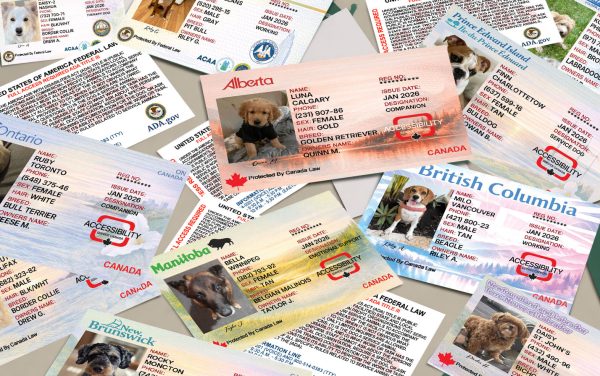
Example State Cards

Most Recent Registrations
Welcome M&M from New Mexico
Welcome Mika from North Carolina