
New Mexico Emotional Support Animal Laws
Get Your Documents
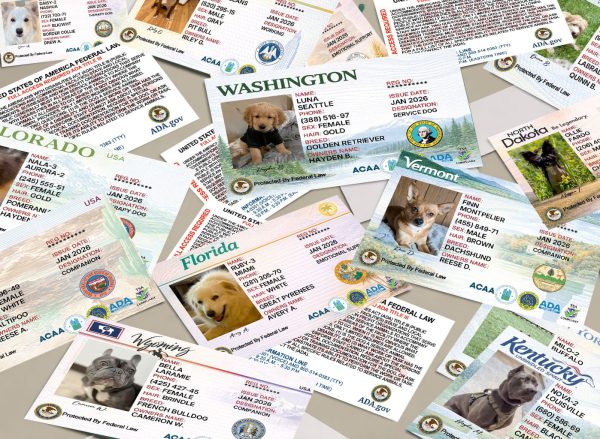
Example State Cards
Overview of ESA and Legal Definitions in New Mexico
What is an Emotional Support Animal?
An Emotional Support Animal (ESA) is defined as an animal that provides comfort and emotional assistance to individuals suffering from mental or emotional disabilities. Unlike service animals that are specifically trained to perform tasks for a person with a disability, ESA do not require special training to fulfill their role. They are primarily used to alleviate symptoms of psychiatric conditions such as anxiety, depression, PTSD, and other emotional/psychological disorders. In New Mexico, New Mexico Emotional Support Animal Laws recognize ESA primarily through the benefits they provide as supported by a recommendation from a licensed mental health professional.
How ESA Differ from Service Animals
While Emotional Support Animals play a significant role in an individual’s well-being, it is crucial to distinguish ESA from service animals. Service animals, as defined by the Americans with Disabilities Act (ADA), are usually dogs trained to perform specific tasks for individuals with disabilities, such as guiding a person who is visually impaired, alerting a person with a hearing impairment, or providing physical support. ESA, on the other hand, do not undergo specialized task-focused training. This fundamental difference influences their treatment under the law, as ESA do not enjoy the same public access rights as service animals.
Key Federal Laws Affecting ESA (e.g., FHA, ACAA)
Key federal laws such as the Fair Housing Act (FHA) and the Air Carrier Access Act (ACAA) play prominent roles in shaping the rights of Emotional Support Animal owners. Under the FHA, housing providers are required to make reasonable accommodations for individuals with documented needs for an ESA, which means allowing tenants to live with their ESA regardless of a property’s pet restrictions. The ACAA previously allowed ESA on flights without additional fees, but recent amendments have since led to ESA being treated as pets rather than service animals on airlines. Understanding these differences is critical for ESA owners navigating through housing and travel requirements.
State-Specific ESA Laws in New Mexico
Housing Rights and Responsibilities
In New Mexico, housing rights for ESA owners are strongly supported under the Fair Housing Act. Individuals with a legitimate need for an ESA, as substantiated by a licensed mental health professional, can request reasonable accommodation in housing settings that otherwise impose a no-pet policy. Landlords may ask for proper documentation but cannot charge additional fees or impose breed or size restrictions as long as the ESA does not pose a direct threat to others or cause substantial damage to property.
Public Access and Accommodation
Unlike service animals, ESA are not granted the right of entry into all public spaces in New Mexico. While service animals are allowed in places where the general public goes, ESA can be granted access only if the establishment permits pets. An ever-important distinction for ESA owners in New Mexico is recognizing that their rights do not override the rules established for typical pets in public settings.
Transportation and Travel Rules
Federal changes have influenced how ESA are treated during air travel. The ACAA no longer mandates that airlines accommodate ESA as they do service animals. Consequently, airlines may handle ESA as pets, requiring them to travel in the cargo hold or as carry-ons subject to fees and size restrictions. ESA owners planning to travel from or within New Mexico should verify the specific policies of airlines well in advance of their travel dates.
Employment and Workplace Considerations
The rights of ESA owners within employment settings are less clearly defined compared to housing and air travel. While service animals may be accommodated per ADA guidelines, ESA do not have the same legal basis for accommodation in the workplace. However, employers in New Mexico may opt to voluntarily allow ESA if it helps an employee function better, often considered on a case-by-case basis and hinging on an open dialogue between employer and employee.
Documentation, Requirements, and Processes in New Mexico
ESA Letters and Who Can Issue Them
A crucial part of legitimizing an ESA in New Mexico involves obtaining the correct documentation, typically an ESA letter. This letter must be issued by a licensed mental health professional, such as a psychologist, psychiatrist, or licensed social worker, and it must detail the professional’s diagnosis and affirmation that the ESA is necessary for the patient’s mental health. The letter should be on official letterhead, include the professional’s license number, and be dated within one year of the request for accommodation.
Landlord, Business, and Provider Verification Rules
Landlords and businesses may request verification of an ESA but must adhere to privacy rules. They are permitted to verify the authenticity and necessity of the ESA letter but should avoid probing into personal medical histories or demanding excessive evidence beyond the legitimate documentation.
Rights, Limitations, and Legal Risks
Rights ESA Owners Have in New Mexico
ESA owners in New Mexico have specific rights, most notably in housing where they are protected under federal law to live with their ESA regardless of no-pet policies. This protection ensures that individuals requiring emotional support from an ESA can maintain their living arrangements without undue burden or discrimination.
Limits on ESA Protections and Common Restrictions
Despite the housing protections, ESA rights are limited in public accommodations and transit areas. ESA are not granted automatic access to public venues, restaurants, or businesses unless they comply with pet policies. They may also face restrictions during air travel, reflecting their classification separate from service animals.
Penalties for Fraud or Misrepresentation
Engaging in the misrepresentation of an ESA as a service animal can lead to serious legal repercussions. New Mexico, aligned with federal sentiment, imposes penalties on individuals fraudulently claiming their animal as a service animal to gain access or bypass regulations, including potential fines and legal action.
Practical Guidance for ESA Owners in New Mexico
How to Qualify for an ESA Legitimately
Qualifying for an ESA in New Mexico largely involves consulting with a licensed mental health provider who can assess the individual’s need for emotional support. Adequate documentation in the form of an ESA letter formalizes this qualification and enables a person to enjoy associated protections and accommodation rights.
How to Talk to Landlords, Airlines, and Employers
Clear and proactive communication is key for ESA owners when discussing needs with landlords, airlines, and employers. It is recommended to present legitimate ESA documents early in dialogues to allow for arrangements and expectations. Addressing concerns upfront and demonstrating understanding of relevant laws can facilitate a cooperative approach.
Summary of ESA Laws in New Mexico
For ESA owners in New Mexico, navigating the overlap between federal and state regulations is vital. Key rights and limitations can be summarized as follows:
- Housing: ESA are allowed in housing with no-pet policies when supported by required documentation.
- Public Access: ESA do not have the same public access rights as service animals, entry to establishments depends on standard pet policies.
- Travel: ESA policies on airlines vary; they are often treated as pets, subject to fees and restrictions.
- Employment: Limited protections exist, but voluntary workplace accommodations may be possible through employer negotiations.
- Documentation: An ESA letter is crucial; no legal registration or certification is recognized.
- Fraud Penalties: Misrepresenting an ESA as a service animal can lead to fines and other legal sanctions.
Understanding and adhering to these guidelines will ensure compliance and help individuals enhance their daily lives with the companionship of their emotional support animals.
Get Your Documents
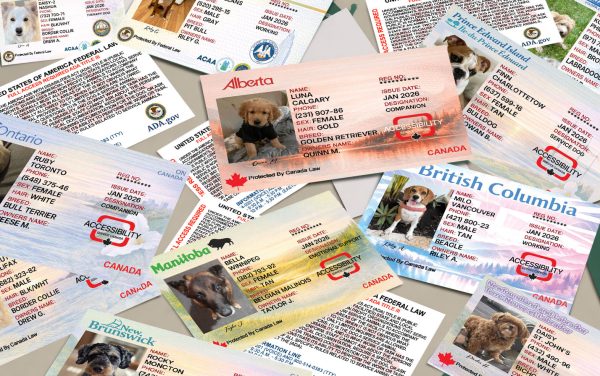
Example State Cards

Most Recent Registrations
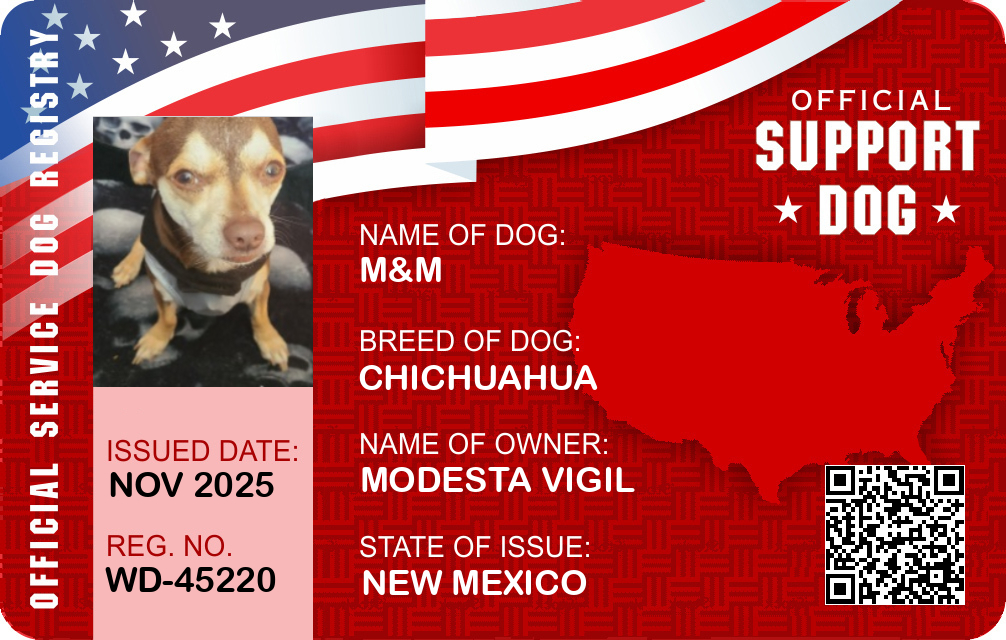
Welcome M&M from New Mexico
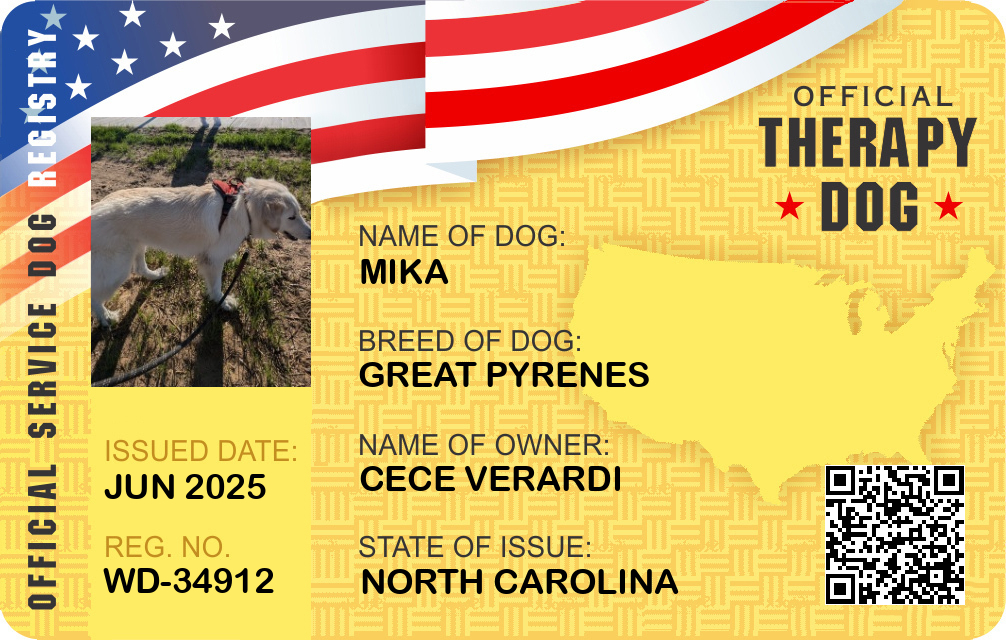
Welcome Mika from North Carolina