
South Carolina Emotional Support Animal Laws
Get Your Documents
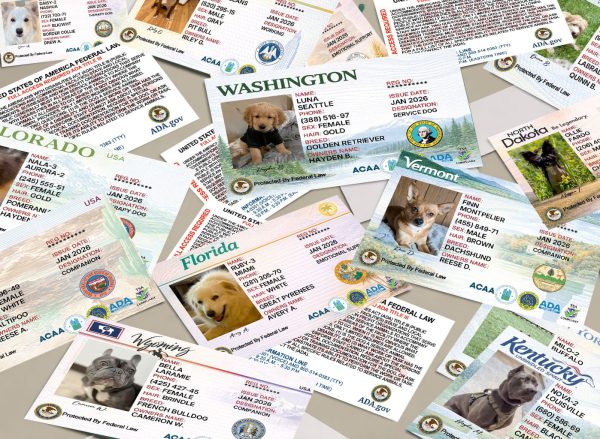
Example State Cards

Overview of ESA and Legal Definitions in South Carolina
What is an Emotional Support Animal?
An Emotional Support Animal (ESA) provides comfort and support to individuals with emotional or mental health disorders. Unlike service animals trained to perform specific tasks related to a person’s disability, ESA offer therapeutic benefits through companionship. Under federal definitions, an ESA is not considered a pet but rather an important aspect of a treatment plan for individuals with substantial mental health needs.
How ESA Differ from Service Animals
ESA differ notably from service animals. While service animals, usually dogs, are individually trained to perform tasks for a person with a disability, ESA require no specific training or certification beyond providing emotional comfort. As such, ESA are not granted the same broad public access rights as service animals. This distinction plays a significant role in the legal treatments and accommodations provided to ESA compared to those afforded to service animals, both federally and within South Carolina.
Key Federal Laws Affecting ESA (e.g., FHA, ACAA)
Two primary federal laws impact the rights of ESA owners: the Fair Housing Act (FHA) and the Air Carrier Access Act (ACAA). The FHA mandates reasonable accommodations for individuals with disabilities, requiring landlords and housing providers to allow ESA despite pet restrictions or policies. Meanwhile, the ACAA enables individuals to travel with their ESA in the cabin of an aircraft without additional charges, provided necessary documentation is submitted. These federal provisions ensure that individuals with emotional disorders are not unduly burdened when it comes to housing and air travel.
State-Specific ESA Laws in South Carolina
Housing Rights and Responsibilities
In South Carolina, housing rights for ESA owners are dictated largely by the FHA. Landlords must allow ESA if the owner has valid documentation of an emotional or psychiatric need. Housing providers can request an ESA letter from a licensed mental health professional to verify the owner’s need. Nevertheless, individuals with ESA must comply with reasonable accommodations guidelines, ensuring that their animal does not cause undue disruption or damage within the housing environment.
Public Access and Accommodation
Unlike service animals, ESA do not have guaranteed access to public spaces such as restaurants, stores, or transportation systems in South Carolina. Businesses and public facilities are not required by law to accommodate ESA, allowing denials based on standard pet policies. However, many organizations and establishments might opt to accommodate ESA as a courtesy, though it is important for ESA owners to understand that this is not a legal requirement.
Transportation and Travel Rules
While the ACAA provides federal protection for ESA in air travel, local travel accommodations in South Carolina, such as buses and trains, follow general pet policies unless otherwise specified by the carrier. ESA owners should verify with individual transportation providers regarding their specific policies, as these establishments retain the discretion to apply standard pet requirements to ESA.
Employment and Workplace Considerations
South Carolina does not have specific ESA employment laws beyond federal protections under the ADA for service animals. Employers are not obliged to permit ESA in the workplace, although discussions around reasonable accommodation requests can be initiated on an individual basis. Employers may consider these requests but are not legally bound to allow ESA without sufficient medical documentation supporting the necessity of the ESA for an employee’s workspace comfort.
Documentation, Requirements, and Processes in South Carolina
ESA Letters and Who Can Issue Them
An ESA letter is a crucial component for ESA validation in South Carolina. To obtain one, individuals must consult a licensed mental health professional (LMHP), such as a psychiatrist, psychologist, or licensed clinical social worker. The letter should specifically outline the individual’s mental or emotional diagnosis, the role the ESA plays in alleviating symptoms, and the professional credentials of the LMHP. This documentation is essential for housing or travel accommodations.
Registration, Certifications, and Common Misconceptions
There is no legal requirement for the registration or certification of ESA in South Carolina or federally. Websites or services claiming to “register” ESA are often misleading, as the only legitimate requirements involve obtaining an ESA letter from an LMHP. Misunderstanding this could lead to unnecessary expenses or invalid documentation, highlighting the need for awareness among ESA owners about the true legal necessities.
Landlord, Business, and Provider Verification Rules
Landlords and housing providers in South Carolina may verify ESA letters by contacting the issuing mental health professional, though they are not entitled to access detailed medical records. Businesses and transportation providers have limited recourse in verifying ESA status, given that ESA are not granted public access rights beyond specific scenarios such as housing or air travel.
Rights, Limitations, and Legal Risks
Rights ESA Owners Have in South Carolina
ESA owners have the right to reasonable accommodations in housing under federal law, provided they have valid ESA letters from an LMHP. Air travel accommodations are also a crucial right under the ACAA, requiring compliance with airlines’ documentation procedures. These rights are foundational for individuals who rely on ESA for mental health support.
Limits on ESA Protections and Common Restrictions
ESA protections are not all-encompassing; notably, they do not include the right to public access beyond housing and designated air travel scenarios. Restrictions may occur in places such as restaurants, stores, and public transportation, where ESA may be treated as regular pets. Understanding these limitations is crucial to navigate societal interactions smoothly without assuming undue rights.
Penalties for Fraud or Misrepresentation
Misrepresenting an animal as an ESA or service animal is not only unethical but can lead to legal repercussions, including fines or denial of housing and travel accommodations. South Carolina, like many states, views fraudulent ESA documentation as a serious offense, undermining legitimate ESA needs and creating barriers for genuinely qualified individuals.
Practical Guidance for ESA Owners in South Carolina
How to Qualify for an ESA Legitimately
To qualify for an ESA in South Carolina, individuals should first consult with an LMHP to discuss their mental health condition and how an ESA could benefit their treatment plan. Essential steps include obtaining an ESA letter and understanding both federal and South Carolina-specific laws that pertain to housing and travel accommodations.
How to Talk to Landlords, Airlines, and Employers
When engaging with landlords, airlines, or employers, it’s important for ESA owners to present their ESA letter professionally and be prepared to discuss their need for the animal in a reasonable manner. Clarity and patience in these discussions can promote understanding and cooperation, ensuring compliance with legal standards and mutual respect.
Summary of ESA Laws in South Carolina
- ESA owners have housing accommodation rights under the FHA requiring valid documentation.
- Public access for ESA is generally not guaranteed, differing significantly from service animal laws.
- For air travel, ESA owners must comply with ACAA documentation requirements for cabin access.
- South Carolina does not mandate workplace ESA accommodations, though requests can be made.
Get Your Documents
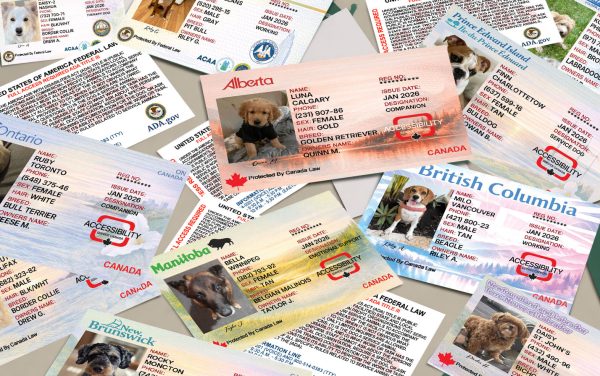
Example State Cards

Most Recent Registrations
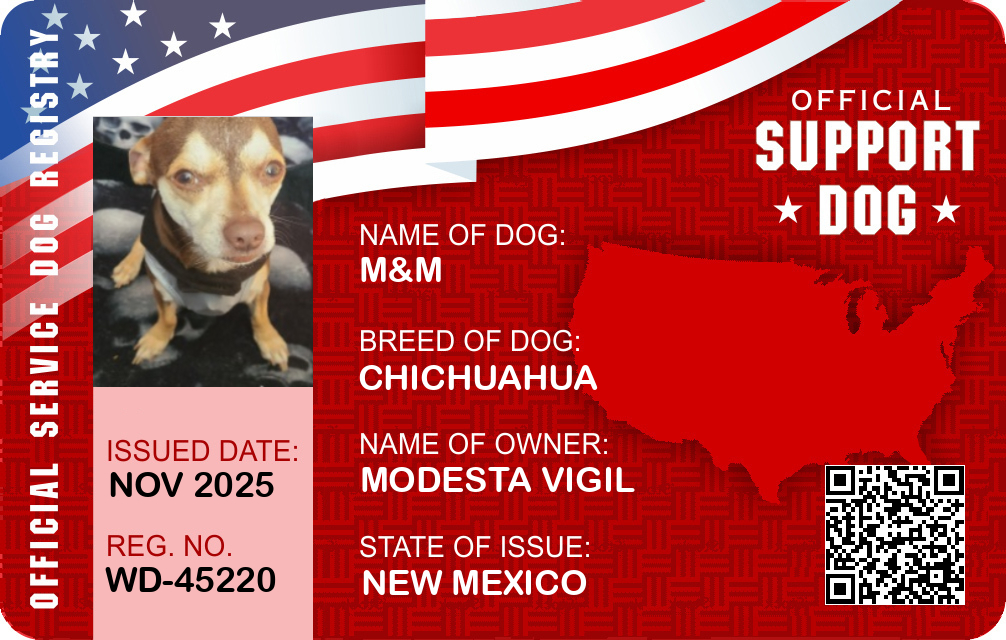
Welcome M&M from New Mexico
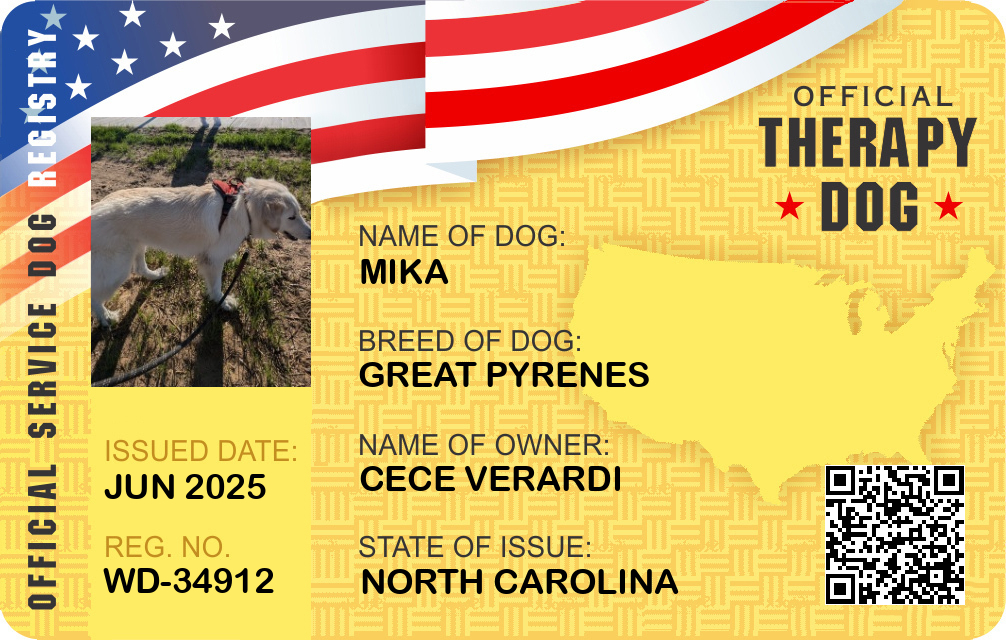
Welcome Mika from North Carolina